In fifteen years of sourcing and processing botanical raw materials, few ingredients have seen a surge in global demand quite like ashwagandha (Withania somnifera). But alongside exponential market growth comes an inevitable supply-chain shadow: economic adulteration. For contract manufacturers and supplement brand owners, the most widespread compliance vulnerability is not synthetic spiking-it is the surreptitious substitution or blending of cheap ashwagandha leaves into raw materials labeled as "100% Pure Root Extract." If your incoming quality control does not screen specifically for plant-part authenticity, your premium root product may actually be an aerial-part blend. Here is how the substitution works and how to protect your brand.
The Economic Engine Behind Leaf Adulteration
To understand why this practice persists, one must look at agricultural economics in traditional growing hubs such as Rajasthan and Madhya Pradesh in India, as well as emerging cultivation regions in China:
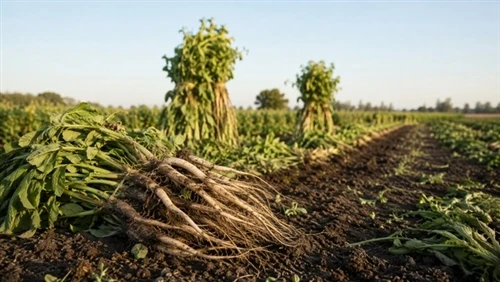
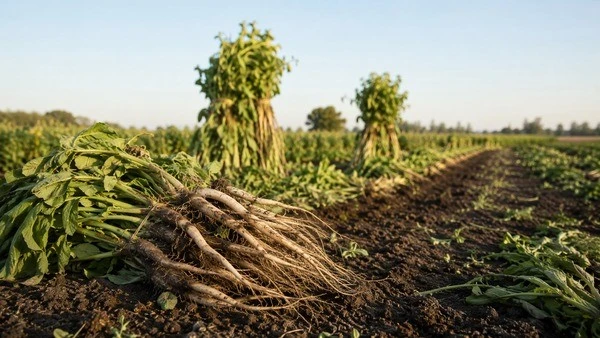
Root Biomass: Cultivating mature, high-potency roots takes 5 to 7 months of careful soil management. Roots must be harvested, washed of heavy red clay, dried, hand-graded, and peeled. Dried root biomass commands roughly $3.50 to $6.00 per kilogram at the farm gate.
Leaf Biomass: Aerial leaves and stems grow rapidly, can be pruned multiple times per season, and are traditionally considered agricultural by-products. Dried leaf biomass costs as little as $0.40 to $0.80 per kilogram-nearly an 80% to 90% cost reduction.
Furthermore, ashwagandha leaves synthesize high concentrations of withanolides-often reaching 2.0% to 3.5% dry weight, compared to 0.3% to 1.0% in roots. An unscrupulous extractor can process an inexpensive batch of leaves and easily hit a "5% or 10% Total Withanolide" specification on paper, offering prices that pure root processors cannot mathematically match.
Why Plant Part Matters: Safety and Regulatory Compliance
Is blending leaves truly problematic if the active percentage looks adequate on a certificate of analysis? From an ethical, clinical, and regulatory perspective, the answer is an unequivocal yes:
1. The Traditional Ayurvedic Mandate
For more than 3,000 years, Classical Ayurveda specified only the root (known as Ashwagandha Radix) for Rasayana (rejuvenative and adaptogenic) preparations. The leaves were reserved primarily for severe topical skin conditions or external poultices due to their caustic nature.
2. Cytotoxicity and Withaferin A Concentrations
The primary withanolide in leaves is Withaferin A, a compound with well-documented cytotoxic and antiproliferative properties. While Withaferin A is a fascinating molecule in oncological pharmacology, it is entirely inappropriate for high-dose, chronic dietary supplementation intended for stress reduction, adrenal recovery, or sleep support. Pure root extracts naturally contain very low levels of Withaferin A, concentrating beneficial Withanolide A and Withanosides instead.
3. Global Regulatory Disqualification
Regulators worldwide distinguish strictly between plant parts:
United States: The USP monograph specifically defines Powdered Ashwagandha Root Extract. Selling a root-and-leaf blend labeled as "Root Extract" constitutes misbranding under 21 U.S.C. § 343(a).
European Union: Many EU member states (including Denmark, Poland, and Germany) have issued specific novel food assessments or herbal medicine restrictions distinguishing roots from aerial parts. Several national bodies have flagged leaf-derived extracts due to Withaferin A safety concerns.
India (AYUSH): The Ministry of AYUSH issued official advisories barring the use of ashwagandha leaves in Ayurvedic formulations designated for internal consumption, reaffirming the exclusive use of roots.
How to Detect Leaf Adulteration: Three Analytical Tests
Standard non-specific assays (like gravimetric titration) cannot detect plant-part substitution. To verify that your extract is authentic root material, mandate these three orthogonal tests:
1. The HPLC Ratio Test: Withanolide A vs. Withaferin A
The chemical hallmark of Withania somnifera root is that Withanolide A content is substantially higher than Withaferin A. In contrast, aerial leaves show the exact opposite pattern:
Botanical Part Withanolide A : Withaferin A Ratio Typical Withaferin A Level
Authentic Pure Root > 3 : 1 (up to 10:1) < 0.5% (often < 0.2%)
Pure Leaf Material < 0.3 : 1 (Inverted) 1.5% to 4.0%
Adulterated Root/Leaf Blend 0.5 : 1 to 1.5 : 1 0.8% to 1.5%
The Golden Rule of Ashwagandha HPLC: If your extract's HPLC chromatogram shows a Withaferin A peak that dwarfs the Withanolide A peak, the extract contains significant quantities of leaf, regardless of what the supplier's letterhead claims.
2. HPTLC Fingerprinting (Botanical ID)
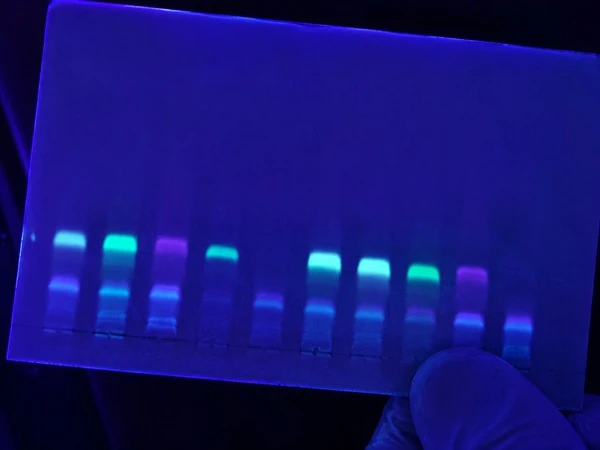
High-Performance Thin-Layer Chromatography (HPTLC) per USP <203> guidelines provides a visual chromatographic band pattern. Under 366 nm fluorescence following derivatization with vanillin-sulfuric acid reagent, pure root exhibits distinct fluorescent bands corresponding to withanosides and withanolide A, while lacking the intense upper bands characteristic of leaf flavonoids and withaferin A clusters.
3. Microscopic and DNA Barcoding for Raw Whole Roots
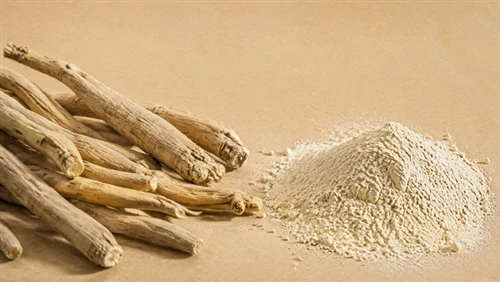
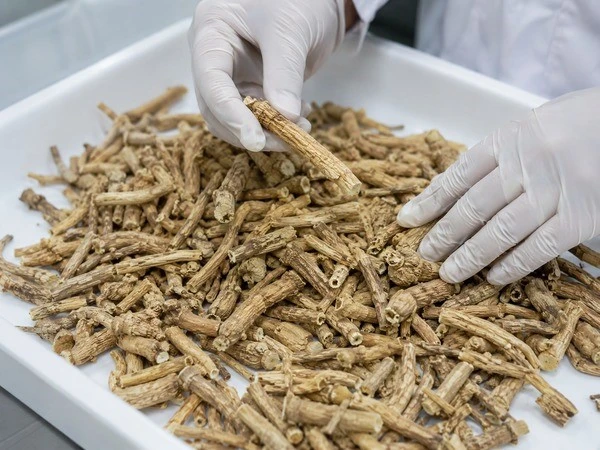
If purchasing whole or cut root biomass prior to extraction, perform macroscopic inspection. Genuine root shows a longitudinal, wrinkled surface, pale yellow-brown coloration, and a smooth transverse fracture. DNA barcoding targeting the matK and rbcL plastid regions confirms taxonomic identity, preventing accidental substitution with related Solanaceae species.
Procurement Red Flags: How to Spot Problematic Offers
When reviewing commercial quotes for bulk ashwagandha extract, treat the following signals as immediate warnings:
Prices below market median: Pure 5% root extract carries hard production costs. Offers priced 30% below prevailing market averages almost always hide leaf dilution.
"Withania somnifera extract" without plant-part qualification: Refusal to state "Root Extract" explicitly on the COA and invoice is a classic legal evasion tactic.
Missing Withaferin A breakdown: COAs that report only "Total Withanolides" and omit individual peak quantification for Withanolide A and Withaferin A.
Excessive green undertones in powder: Pure root extract ranges from light tan to dark cream. A faint greenish cast or intensely pungent grassy odor indicates residual chlorophyll and aerial biomass.
Contract Language to Protect Your Formulation
When finalizing your supply contract, incorporate this exact specification language into your technical quality agreement:
"Material shall be 100% derived from the dried roots of Withania somnifera (L.) Dunal. It shall contain no aerial parts, leaves, or stems. The ratio of Withanolide A to Withaferin A, determined via validated reversed-phase HPLC, shall not be less than 2.5:1. Withaferin A concentration shall not exceed 0.50% w/w on a dry basis."
Suppliers selling authentic root extracts will sign this agreement without hesitation. Those cutting material with leaves will immediately propose revisions or excuses.
References
American Herbal Pharmacopoeia. (2015). Ashwagandha Root (Withania somnifera): Standards of Analysis, Quality Control, and Therapeutics.
Ganzera, M., et al. (2003). Quantitative HPLC analysis of withanolides in Withania somnifera (Ashwagandha). Fitoterapia, 74(1-2), 68–76.
Kaur, P., et al. (2017). Withaferin A vs. Withanolide A: Tissue distribution and bio-safety profiles in rodent models. Journal of Ethnopharmacology, 197, 87–95.
Ministry of AYUSH, Government of India. (2021). Advisory on the use of Withania somnifera (Ashwagandha) leaves. No. Z.28015/45/2021-HPC(EMR)-AYUSH.
United States Pharmacopeial Convention. (2020). USP-NF Monograph: Powdered Ashwagandha Root Extract. Rockville, MD.