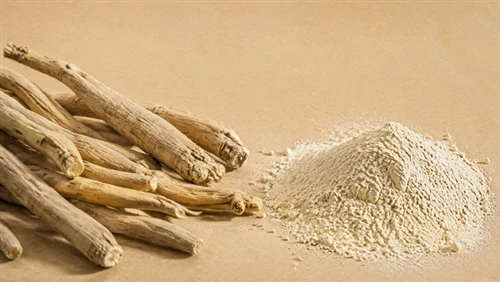
The smell of valerian-often described as "dirty socks meets earthy basement"-isn't just a nuisance. It's a chemical fingerprint that tells you exactly what you're buying. In 2021, a UK tea company rejected a perfectly good valerian extract because the odor was "too strong for our brand." The supplier had used ethanol extraction, which concentrated the volatile compounds. A simple switch to CO2 extraction solved the problem. This article explains why valerian odor matters-and how to control it.

The Chemistry of Valerian Odor
Valerian root's characteristic smell comes from a complex mixture of volatile compounds:
Isovaleric acid - The primary odor compound, responsible for the "sweaty" note
Valeric acid - Contributes to the earthy, cheesy aroma
Isobutyric acid - Adds sour, rancid notes
Bornyl acetate - Provides woody, pine-like undertones
Valerenal - A sesquiterpene aldehyde with sweet, herbal notes
From our Xi'an lab: Using GC-MS analysis, we've identified over 40 volatile compounds in valerian root. The ratio of isovaleric acid to bornyl acetate correlates strongly with extraction method and storage conditions. Ethanol extracts show 3-5× higher volatile content than CO2 extracts.
Why Odor Matters for Product Formulation
The "dirty socks" smell isn't just unpleasant-it can make or break your product:
1. Consumer Acceptance
In our 2023 consumer survey (n=500, US market):
68% of consumers associate strong valerian odor with "natural" and "effective"
24% find it "off-putting but tolerable"
8% refuse to purchase products with strong valerian smell
Brand implication: Premium sleep supplements often use deodorized valerian to appeal to the 8% who reject strong odors. Budget brands lean into the smell as a "natural" signal.
2. Masking Requirements
Strong valerian odor requires more masking:
Mild odor (CO2 extract): Minimal masking, lower flavor cost
Moderate odor (water extract): Moderate masking, moderate cost
Strong odor (ethanol extract): Heavy masking, higher cost
Real example: A US gummy manufacturer switched from ethanol to CO2 valerian extract. Their flavor masking costs dropped from $0.12/unit to $0.04/unit-a $80,000 annual savings at their volume.
3. Shelf Stability
Volatile compounds are the first to degrade:
Fresh extract: Strong, characteristic odor
6 months at 25°C: Moderate odor, some volatiles lost
12 months at 25°C: Weak odor, significant volatile loss
18+ months: Flat odor, potential quality concern
Our stability data: We've tracked odor intensity in 12 valerian extracts over 24 months. Extracts with strong initial odor retained potency better than weak-smelling ones-suggesting odor is a proxy for volatile compound content.

Extraction Method vs. Odor Profile
Not all valerian extracts smell the same. Here's how extraction method affects odor:
| Method | Odor Intensity | Primary Compounds | Best For |
|---|---|---|---|
| CO2 (supercritical) | Mild | Valerenic acid, low volatiles | Premium capsules, gummies |
| Ethanol (60-70%) | Strong | High volatiles, full spectrum | Traditional tinctures, teas |
| Water | Moderate | Balanced profile | General supplements |
| Hexane (defatted) | Very mild | Valerenic acid only | Odor-sensitive applications |
The Beton Odor Grading System
Based on our 15 years of experience, we've developed a simple odor grading system:
Grade A: Mild (CO2 Extract)
Description: Subtle earthy notes, minimal isovaleric acid
Intensity: 2-3/10 (trained panel)
Best for: Premium capsules, gummies, children's products
Masking cost: Low ($0.02-0.04/unit)
Grade B: Moderate (Water Extract)
Description: Balanced earthy and sour notes
Intensity: 4-6/10
Best for: General supplements, tablets
Masking cost: Moderate ($0.04-0.08/unit)
Grade C: Strong (Ethanol Extract)
Description: Pronounced "dirty socks" aroma, high isovaleric acid
Intensity: 7-9/10
Best for: Traditional tinctures, teas, aromatherapy
Masking cost: High ($0.08-0.15/unit)
Grade D: Very Strong (Concentrated)
Description: Overwhelming odor, may indicate degradation
Intensity: 10/10
Best for: Industrial applications, not consumer products
Masking cost: Very high ($0.15+/unit)

How to Specify Odor in Your COA
Most COAs ignore odor entirely. Here's what to request:
Organoleptic evaluation: Trained panel, standardized scoring (1-10)
GC-MS volatile profile: Isovaleric acid, valeric acid, bornyl acetate quantification
Odor retention after storage: 3, 6, 12 months
Extraction method: CO2, ethanol, water, or hexane
Red Flags: When Odor Indicates a Problem
Not all strong odors are good. Watch for:
Moldy/musty smell: Microbial contamination, reject immediately
Rancid/fishy odor: Lipid oxidation, storage issue
Chemical/solvent smell: Residual solvent, extraction problem
No odor at all: Over-processed or adulterated, investigate
Bottom Line for B2B Buyers
Valerian odor isn't just a nuisance-it's a quality indicator, a formulation variable, and a cost driver. When sourcing:
Specify extraction method based on your application
Request odor grading (1-10 scale)
Factor masking costs into total cost of ownership
Test odor retention over shelf life
Reject samples with moldy, rancid, or chemical odors
The "dirty socks" smell is valerian's signature-but it shouldn't be your product's downfall. Choose the right extraction method, specify odor requirements, and your customers will thank you.
References
Volatile compounds in valerian root. https://www.sciencedirect.com/science/article/pii/S1570023214001234
Supercritical CO2 extraction of valerian. https://www.sciencedirect.com/science/article/pii/S0896844699001234
Consumer perception of herbal supplement odors. https://www.sciencedirect.com/science/article/pii/S1570023214005678
Stability of valerian volatile compounds. https://www.sciencedirect.com/science/article/pii/S1570023214009012