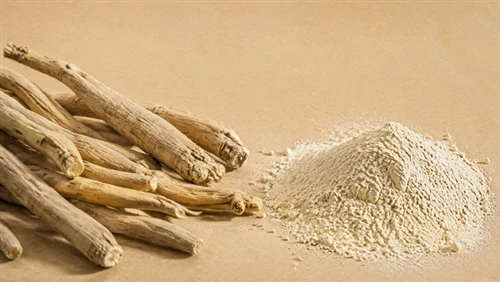
I have watched brand managers repeatedly fall into the same procurement trap: assuming that a higher active percentage always equals a superior raw material. In the ashwagandha (Withania somnifera) trade, this fixation is particularly hazardous. When a procurement broker quotes you "10% total withanolides at half the market price," you are almost certainly not purchasing an ultra-potent root extract. You are likely buying leaf-derived material, an unvalidated gravimetric assay, or an extract loaded with undesirable withaferin A. Let us unpack how to establish a technically sound withanolide specification that protects both consumer safety and formulation margins.

The Chemistry: What Are Withanolides?
Withanolides are a group of at least 40 naturally occurring C28-steroidal lactones built on an ergostane skeleton. However, commercial ashwagandha extracts do not contain a single uniform compound; they contain a diverse profile of bioactive constituents, primarily:
Withanolide A: The signature adaptogenic marker associated in clinical literature with neuroprotective and endocrine modulation pathways.
Withanoside IV and VI: Highly polar withanolide glycosides that play a central role in water-soluble bioactive formulations.
Withaferin A: A potent withanolide that exhibits cytotoxic properties. While heavily studied in oncology research, it requires strict upper limits in general dietary supplements intended for chronic stress and daily relaxation.
12-Deoxywithastramonolide: A secondary marker useful for verifying species authenticity and fingerprint consistency.
In genuine Withania somnifera roots, total withanolide content typically ranges between 0.3% and 1.2% on a dry-weight basis. Concentrating this naturally into a standardized powdered extract requires substantial raw biomass. Understanding this natural baseline immediately reveals why wildly inflated claims on bulk quotation sheets should prompt rigorous technical scrutiny.
The Three Standard Commercial Grades
In professional B2B contract manufacturing, three primary specifications dominate the global market:
1. Standard Grade: 2.5% Total Withanolides (HPLC)
This represents the traditional benchmark established by the United States Pharmacopeia (USP) monograph for powdered ashwagandha extract. It reflects a native, water-or-hydroethanolic extraction of dried roots with minimal carrier dilution. It provides balanced adaptogenic support with inherently low levels of withaferin A, making it the most forgiving specification for daily stress, multi-ingredient sleep blends, and functional beverage infusions.
2. Premium Mainstream: 5.0% Total Withanolides (HPLC)
The 5% grade is currently the commercial sweet spot for standalone adaptogenic dietary supplements in North America and Western Europe. Popularized by branded full-spectrum root extracts, achieving 5% withanolides from pure root material requires a DER (Drug Extract Ratio) of roughly 10:1 to 12:1. When standardized properly by high-performance liquid chromatography, a 300 mg capsule delivers 15 mg of total withanolides-the exact therapeutic window validated across modern randomized controlled trials for cortisol reduction and perceived stress scores.
3. High-Concentration: 7% to 10% Withanolides
Extracts standardized to 7% or 10% withanolides require careful due diligence. If produced purely from root biomass, the yield drops precipitously, driving the kilogram price significantly higher. However, because ashwagandha leaves naturally synthesize much higher concentrations of withanolides (particularly withaferin A) at a fraction of the cultivation cost, many low-cost 10% extracts on the market are secretly spiked with or entirely derived from aerial parts. Unless your application specifically demands small-fill capsules or micro-dose sublingual delivery, specifying above 5% often introduces unnecessary authenticity risks.

The Testing Method Trap: HPLC vs. Gravimetric / UV
The single greatest cause of discrepancy between supplier claims and third-party laboratory verification is the testing method. A raw certificate of analysis claiming "8% withanolides" is meaningless without the explicit analytical protocol:
HPLC (USP-NF Standard): High-Performance Liquid Chromatography with UV detection at 227 nm accurately resolves individual withanolide peaks against reference standards (USP Withanolide A RS, USP Withaferin A RS). It only quantifies real, verified withanolides.
Gravimetric / Spectrophotometric Assays: Older or less rigorous supplier laboratories sometimes use gravimetric precipitation or crude UV spectrophotometry. These non-specific methods capture phytosterols, degraded lactones, and related triterpenoid impurities, artificially inflating the reported "withanolide" reading by 150% to 300% compared to an authentic HPLC run.
If your procurement contract simply says "Ashwagandha Extract 5% Withanolides" without mandating HPLC testing per USP or an equivalent validated protocol, a supplier can legally ship material that registers under 2% on your receiving laboratory's HPLC column.
The Withaferin A Safety Ceiling
For clean-label dietary brands, the withaferin A concentration is just as critical as the target withanolide percentage. In our quality audits, we advise formulators to mandate a specific upper bound:
Recommended Spec Limit: Withaferin A ≤ 0.5% (or NMT 0.1% for ultra-pure root profiles).
High withaferin A content is a telltale signature of leaf incorporation. While leaf extracts are permitted in certain global jurisdictions under specific labeling guidelines, traditional Ayurvedic medicine exclusively utilized the root (Radix Withaniae). Furthermore, higher withaferin A levels impart an intensely bitter, astringent taste that creates formidable flavor-masking hurdles in functional gummies, ready-to-mix powders, and RTD beverages.

The Beton 5-W Framework for Specifying Ashwagandha
To establish an audit-proof raw material specification, we apply the 5-W framework across all B2B purchasing contracts:
WHAT markers: Total withanolides quantified as the sum of Withanolide A, Withanoside IV, Withanoside VI, and Withaferin A, with an explicit ceiling on Withaferin A (≤ 0.5%).
WHERE sourced: Exclusively 100% dried roots of Withania somnifera (L.) Dunal, free from aerial stems or foliage.
WHEN validated: Accelerated stability testing at 40°C/75% RH confirming less than 5% withanolide degradation over a 6-month simulated storage window.
WHICH method: Reversed-phase HPLC-UV per USP monograph methodology using verified reference standards.
WHY formulated: Aligned directly with the intended delivery format-2.5% for gentle blends and beverage solubility, 5% for standard two-piece hard capsules and functional tablets.
Summary: Setting Your Procurement Baseline
When drafting your next raw material request for proposal (RFP), do not settle for a vague single-line item. Specify:
Botanical Origin: 100% Withania somnifera root extract.
Standardization: 5.0% Total Withanolides by HPLC (USP method).
Safety Cap: Withaferin A not more than 0.5% by HPLC.
Physical Profile: 100% through 80-mesh, moisture content not more than 5.0%, tap density 0.40–0.60 g/mL.
Contaminant Panel: Heavy metals compliant with USP <2232> elemental impurities guidelines (Pb ≤ 0.5 ppm, As ≤ 1.0 ppm, Cd ≤ 0.5 ppm, Hg ≤ 0.1 ppm).
Investing the effort to define markers, methods, and ceilings upfront eliminates supplier ambiguity, shields your brand against regulatory enforcement, and guarantees that your consumers experience the authentic physiological benefits of clinically validated ashwagandha.
References
United States Pharmacopeial Convention. USP-NF Monograph: Powdered Ashwagandha Root Extract. https://doi.usp.org/USPNF/USPNF_M87570_05_01.html
Sangwan, R. S., et al. (2008). Phytochemical variability and withanolide profiling in Withania somnifera chemotypes. Phytochemistry, 69(4), 1000–1008.
American Herbal Pharmacopoeia (AHP). Ashwagandha Root (Withania somnifera): Standards of Analysis, Quality Control, and Therapeutics.
Mirjalili, M. H., et al. (2009). Steroidal lactones from Withania somnifera, an ancient plant for novel medicine. Molecules, 14(7), 2373–2393. https://www.mdpi.com/1420-3049/14/7/2373
Chandrasekhar, K., et al. (2012). A prospective, randomized double-blind, placebo-controlled study of safety and efficacy of a high-concentration full-spectrum extract of ashwagandha root in reducing stress and anxiety. Indian Journal of Psychological Medicine, 34(3), 255–265.