Most garlic supplements talk about allicin, but the real hero of aged black garlic is a compound most people have never heard of: S-allyl cysteine (SAC). Allicin is unstable, volatile, and largely destroyed during digestion. SAC, by contrast, is odorless, highly bioavailable, and accumulates to levels roughly six times higher in aged garlic than in raw cloves. That single difference explains why black garlic extract, not raw garlic pills, is what the cardiovascular research actually backs.
You already know garlic is one of the oldest medicinal foods on earth. Hippocrates prescribed it. Egyptian laborers were issued rations of it. What you may not know is that the aging process transforms garlic's chemistry in ways that make its most valuable compound dramatically easier for your body to absorb and use. This guide explains the science behind SAC. It decodes the specification sheets that formulators rely on, and maps out the sourcing decisions that separate a premium black garlic extract from a jar of caramelized cloves with a label slapped on it.
Below, you'll find: what happens chemically when garlic turns black, why SAC outperforms allicin, the clinical evidence for cardiovascular and metabolic benefits, a side-by-side comparison with raw garlic, precise dosage guidance, safety considerations, and a practical buyer's guide for both supplement shoppers and B2B formulators.
SAC, not allicin, is the active compound that matters. It reaches ~98% oral bioavailability and crosses the blood-brain barrier, something allicin cannot do.
Aging multiplies SAC content roughly 6×. Raw garlic contains ~20–30 µg/g; aged black garlic reaches ~120–180 µg/g.
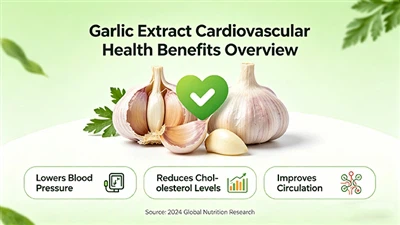
The cardiovascular evidence is strong. A 12-week RCT found LDL dropped 13%, total cholesterol fell 11.8%, HDL rose 11.5%, and blood pressure declined significantly (Nirvanashetty, 2023).
Standardization is the single most important spec. A COA showing HPLC-verified SAC percentage tells you far more about a product's value than an extract ratio like 10:1.
Black garlic extract is dramatically safer on the digestive tract than raw garlic because aging removes the irritant allicin, making it suitable for daily, long-term use.
What Is Black Garlic Extract?
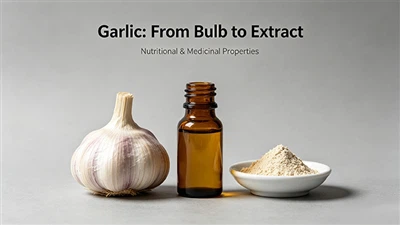
Black garlic extract is a concentrated powder or liquid derived from whole garlic bulbs (Allium sativum) that have undergone a controlled aging process. There's no smoke, no caramelization, and no added sweeteners. The transformation is entirely enzymatic and thermal: a slow, humid incubation that converts sharp, pungent raw garlic into soft, sweet, jet-black cloves with a flavor somewhere between balsamic vinegar, molasses, and tamarind.
The result is aged black garlic extract: a bioactive-rich ingredient that trades raw garlic's unstable allicin for a suite of more stable, more bioavailable sulfur compounds. Chief among them is S-allyl cysteine. Black garlic is just one member of a broader organic plant powder extracts portfolio that formulators draw from for natural health products.
[Image: Infographic showing the transformation from raw garlic to black garlic. Allicin decreases, SAC increases 6×, ORAC increases 5–11×, color shifts from white to black.]
The Maillard Reaction: How Raw Garlic Becomes Black Garlic
The aging process is technically a controlled Maillard reaction combined with enzymatic hydrolysis, carried out under tightly managed conditions:
| Parameter | Typical Range | What It Controls |
|---|---|---|
| Temperature | 60–80°C (140–176°F) | Reaction speed; too hot destroys SAC, too slow stalls conversion |
| Humidity | 70–90% | Prevents drying; maintains enzymatic activity |
| Duration | 60–90 days | Longer aging = higher SAC, darker color, milder flavor |
During these 60 to 90 days, several things happen simultaneously. The cloves darken from white to brown to near-black as melanoidins form. The pH drops as sugars break down. Reducing sugars and amino acids react, generating the characteristic sweet-umami flavor. Most importantly, the γ-glutamyl-S-allylcysteine precursor is enzymatically hydrolyzed into free S-allyl cysteine (SAC). This is the compound that makes aged black garlic pharmacologically distinct from its raw counterpart.
Key Bioactive Compounds in Black Garlic
Aged black garlic is not a single-compound ingredient. It delivers a coordinated matrix of bioactives:
S-allyl cysteine (SAC): the primary organosulfur amino acid; water-soluble, stable, and the compound standardized on quality COAs
Polyphenols: including flavonoids and phenolic acids; contribute to antioxidant capacity
Melanoidins: brown polymers formed during Maillard reaction; possess antioxidant and prebiotic activity
Polysaccharides: immune-modulating complex carbohydrates
S-allylmercaptocysteine (SAMC): a lipid-soluble organosulfur with its own anti-tumor and hepatoprotective activity
Where raw garlic is defined by allicin (a short-lived, pungent compound released when cells are crushed), black garlic extract is defined by SAC. That chemical pivot changes everything about how the body uses it.
S-Allyl Cysteine (SAC): The Star Compound
If you remember one acronym from this guide, make it SAC. Every benefit section that follows traces back to this molecule. Understanding why SAC matters, and why allicin doesn't (at least not for long-term supplementation), is the foundation of every smart formulation or purchase decision.
What Is SAC?
S-allyl cysteine (SAC) is a water-soluble organosulfur amino acid derivative formed when γ-glutamyl-S-allylcysteine is enzymatically hydrolyzed during garlic aging. It is the most abundant and most bioavailable sulfur amino acid in aged garlic, and it is the compound standardized and quantified on a Certificate of Analysis (COA) using HPLC.
Black garlic extract SAC content is the single most reliable marker of an aged garlic extract's quality. It's the number formulators standardize on and the figure you'll find verified by HPLC on any legitimate COA. Raw garlic contains roughly 20–30 µg/g of SAC. After 60–90 days of aging, that figure climbs to approximately 120–180 µg/g, a sixfold increase that directly reflects how much bioactive sulfur the final product delivers.
Bioavailability: Why SAC Beats Allicin
Most garlic supplement marketing misses the mark here. Allicin, the compound everyone cites, is notoriously unstable. It's produced only when garlic cells are damaged, degrades within hours at room temperature, and is largely destroyed by stomach acid before it can be absorbed. Studies have shown that allicin's bioavailability is negligible after oral dosing.
SAC is the opposite:
| Property | Allicin (Raw Garlic) | SAC (Aged Black Garlic) |
|---|---|---|
| Oral bioavailability | Negligible (degraded in GI tract) | ~98% |
| Stability | Hours; heat- and acid-sensitive | Stable; survives processing |
| Blood-brain barrier | Does not cross | Crosses the BBB |
| Half-life | Very short | ~10–14 hours (supports once/twice-daily dosing) |
| GI tolerability | Irritant; causes heartburn, cramping | Odorless; gentle on stomach |
| Odor | Strong, persistent sulfur smell | None |
That ~98% oral bioavailability figure comes from a pharmacokinetic study in healthy adults. It's the reason a clinical dose of aged garlic extract can deliver measurable cardiovascular effects while raw garlic pills often cannot. SAC also crosses the blood-brain barrier, confirmed in animal pharmacokinetic studies, which opens the door to neuroprotective applications no allicin-based product could claim.
[Image: Comparison chart of SAC vs allicin: bioavailability, stability, BBB penetration, GI tolerability]
A formulator we'll call Dr. Maren, a supplement R&D lead at a mid-size European nutraceutical brand, ran into this exact wall. Her team had been formulating a raw garlic powder capsule for cardiovascular positioning, but consumer complaints about reflux and repeat-purchase rates were dragging the SKU down. She switched to an aged garlic extract standardized to 0.5% SAC. The reflux complaints dropped to near zero, and the clinical claims she could substantiate expanded, because she was now working with a compound that actually survives digestion and reaches the bloodstream. The reformulated product went on to become one of the brand's top-three sellers.
How SAC Works in the Body
SAC exerts its effects through four interconnected mechanisms:
Antioxidant action. SAC directly scavenges reactive oxygen species (ROS) while also upregulating endogenous defense systems: the Nrf2 pathway, glutathione (GSH), superoxide dismutase (SOD), and catalase (CAT).
Anti-inflammatory signaling. SAC inhibits NF-κB, the master regulator of inflammation, and reduces downstream cytokines including TNF-α, IL-6, and IL-1β.
Cardiovascular protection. SAC promotes nitric oxide (NO)-mediated vasodilation, improving endothelial function. It also inhibits HMG-CoA reductase, the same enzyme statins target, contributing to cholesterol reduction.
Metabolic regulation. SAC activates AMPK (the cellular energy sensor), improving insulin sensitivity and glucose uptake.
Together, these mechanisms explain why these benefits show up so consistently across cardiovascular, metabolic, hepatic, and neurological research.
Health Benefits of Black Garlic Extract
The research on aged black garlic extract spans over two decades and covers multiple body systems. Below is the evidence organized by benefit area, with the strongest data in cardiovascular health.
Cardiovascular Health (Strongest Evidence)
The clinical evidence runs deepest here.
Blood pressure. A 2020 meta-analysis by Ried and colleagues pooled data from 19 controlled trials. It found that aged garlic extract produced a statistically significant reduction in both systolic and diastolic blood pressure, with the most pronounced effects in hypertensive subjects.
Cholesterol and lipids. The case for cholesterol management is backed by one of the strongest trials in the category. In a 12-week randomized controlled trial (Nirvanashetty, 2023), healthy adults taking 500 mg of aged black garlic extract (standardized to 2.5 mg SAC) daily showed the following changes:
| Marker | Change |
|---|---|
| LDL cholesterol | ↓ 13% |
| Total cholesterol | ↓ 11.8% |
| HDL cholesterol | ↑ 11.5% |
| Triglycerides | ↓ 12.3% |
| Total cholesterol : HDL ratio | ↓ 20.8% |
| Systolic blood pressure | ↓ 5.3% |
| Diastolic blood pressure | ↓ 6.5% |
Eight cardiovascular markers improved in a single 12-week trial. That's difficult to achieve with any single-ingredient supplement.
Arterial health. A 12-month double-blind RCT by Budoff and colleagues (2016) found that aged garlic extract supplemented with CoQ10 slowed the progression of coronary artery calcification in statin users. This suggests a benefit beyond lipid lowering, at the level of arterial plaque stability.
Consider Robert, a 54-year-old marketing executive whose annual physical flagged borderline-high LDL (138 mg/dL) and elevated blood pressure. His doctor recommended lifestyle changes before medication. Robert had tried raw garlic capsules years earlier but quit after weeks of acid reflux and social discomfort over the smell. He switched to an extract standardized to 0.5% SAC, taking 1,000 mg daily with breakfast. At his 12-week follow-up, the same timeframe as the Nirvanashetty trial, his LDL had dropped to 119. His systolic pressure was down 8 points. He'd had zero digestive issues. The difference wasn't motivation or discipline; it was biochemistry. He was finally taking a compound his body could actually absorb.
Curious how SAC fits into a broader cardiovascular formulation? It pairs well with organic ginger extract powder for circulation support.
Antioxidant & Anti-Aging
The antioxidant leap from raw to black garlic is dramatic. Aged black garlic extract's ORAC (Oxygen Radical Absorbance Capacity) value reaches approximately 50,000–58,900 µmol TE/g, roughly 5 to 11 times that of raw garlic. In DPPH free-radical scavenging assays, black garlic achieves 75–85% inhibition compared to 40–50% for raw garlic.
This antioxidant surge comes from three sources working together: the elevated SAC content, the increased polyphenol concentration, and the melanoidins formed during Maillard browning. For formulators targeting anti-aging or cellular-protection positioning, these numbers make it one of the most potent single-ingredient antioxidants available. It also pairs well with synergistic antioxidant combinations like quercetin for amplified free-radical scavenging.
Metabolic Health & Blood Sugar
SAC's activation of AMPK, the same pathway activated by exercise and metformin, makes it relevant for metabolic health. Animal models of type 2 diabetes show that aged black garlic reduces fasting blood glucose and improves insulin sensitivity. Systematic reviews note HbA1c reductions in diabetic models, though human trial data here is less robust than the cardiovascular evidence and should be positioned as supportive rather than primary.
Liver Protection (Hepatoprotective)
It protects against both ethanol-induced and carbon tetrachloride (CCl4)-induced liver injury in animal models. The mechanism involves upregulation of hepatic antioxidant enzymes (SOD, CAT, GSH) and enhanced Phase II detoxification pathways. SAC specifically has been shown to reduce liver enzyme elevations and lipid peroxidation after toxic challenge.
Neuroprotection & Cognitive Health
Because SAC crosses the blood-brain barrier, it can act directly on neural tissue, something allicin cannot do. Research shows SAC reduces β-amyloid toxicity in Alzheimer's disease models and is neuroprotective in Parkinson's models using the 6-OHDA neurotoxin. These are preclinical findings, but they position it as a compelling ingredient for cognitive-health formulations.
Immune System Support
Black garlic polysaccharides and SAC modulate immune function through macrophage activation, enhanced natural killer (NK) cell activity, and cytokine balance. The aging process also generates prebiotic compounds that support gut microbiota, an emerging angle for immune-positioned products.
Clinical Evidence at a Glance
For formulators and clinicians who need to see the data in one place, the structured evidence summary below covers the core studies:
[Image: Clinical evidence summary card, visual version of the table below]
| Study | Population | Dose & Duration | Key Result |
|---|---|---|---|
| Nirvanashetty, 2023 (RCT) | Healthy adults | 500 mg aged black garlic extract (2.5 mg SAC) daily, 12 weeks | LDL ↓13%, TC ↓11.8%, HDL ↑11.5%, TG ↓12.3%, SBP ↓5.3%, DBP ↓6.5% |
| Ried, 2020 (Meta-analysis) | Hypertensive subjects (19 controlled trials) | Aged garlic extract, various doses | Significant systolic & diastolic BP reduction vs. placebo |
| Budoff, 2016 (RCT) | Statin users with subclinical atherosclerosis | AGE + CoQ10, 12 months | Reduced progression of coronary artery calcification |
| Hypercholesterolemia trial | Subjects with elevated cholesterol | Aged black garlic extract, 12 weeks | Significant TC & LDL reduction |
If you're evaluating aged garlic extract for a clinical or formulation context, these four studies represent the core evidence base.
Black Garlic vs Raw Garlic: What's the Difference?
This comparison comes up constantly, and most answers online come from culinary blogs that never mention SAC. The table below breaks down the science-backed black garlic vs raw garlic differences:
| Attribute | Raw Garlic | Aged Black Garlic Extract |
|---|---|---|
| Key active compound | Allicin (unstable, short-lived) | SAC (stable, ~98% bioavailable) |
| SAC content | ~20–30 µg/g | ~120–180 µg/g (~6× higher) |
| ORAC value | ~4,500–8,000 µmol TE/g | ~50,000–58,900 µmol TE/g (5–11× higher) |
| DPPH scavenging | 40–50% | 75–85% |
| Flavor | Pungent, sharp, spicy | Sweet, umami, balsamic-molasses |
| Digestibility | Can cause heartburn, cramping, GI irritation | Gentle; odorless; well-tolerated |
| Blood-brain barrier | Allicin does not cross | SAC crosses the BBB |
| Best use | Acute antimicrobial, culinary | Long-term cardiovascular, neuroprotection, daily supplementation |
When to Choose Black Garlic Extract Over Raw Garlic
Long-term supplementation and daily wellness → Choose this extract. The stable, bioavailable SAC makes it suitable for months or years of consistent use.
Acute antimicrobial or antifungal needs → Raw garlic still has a role. Allicin, though short-lived, is a potent antimicrobial when freshly crushed and used immediately.
Cardiovascular, metabolic, or neuroprotective goals → This extract. The clinical trials cited above all used aged garlic, not raw.
Sensitive digestion or social odor concerns → This extract. Aging eliminates the irritant allicin and the sulfur breath that accompanies it.
Dosage: How Much Black Garlic Extract Should You Take?
The recommended black garlic extract dosage depends on your health goal and the SAC concentration of your product. The practical guide below is derived from clinical study doses and pharmacokinetic extrapolation.
Dosage by Application
| Goal | Daily Extract Dose | Approx. SAC Equivalent |
|---|---|---|
| General antioxidant support | 500–1,000 mg | 1–2 mg SAC |
| Cardiovascular support (clinical dose) | 500–2,000 mg | 2.5 mg SAC (clinical benchmark) |
| Metabolic / blood sugar support | 600–1,200 mg (divided doses) | 2–5 mg SAC |
| Pure SAC (if using isolated compound) | - | 5–20 mg SAC |
[Image: Dosage guide chart by application, with SAC mg equivalents]
Timing & Best Practices
Take with meals, particularly those containing fat. SAC is water-soluble, but co-administration with food improves overall tolerance and absorption of the extract matrix.
Consistency matters more than timing. The cardiovascular benefits in the Nirvanashetty trial appeared after 12 weeks of daily use. There is no acute "pre-workout" effect.
Split larger doses (above 1,000 mg) into two servings to maintain steady SAC levels, given the 10–14 hour half-life.
SAC Content in Commercial Products
Most consumers, and many formulators, get confused here. SAC content varies enormously between products:
Standard aged garlic extract (AGE): typically 0.1%–0.5% SAC
Concentrated black garlic extract powder: up to 1%–2%+ SAC
To calculate your actual SAC intake from any product, multiply the serving size (in mg) by the SAC percentage. For example: 500 mg of a 0.5% SAC extract delivers 2.5 mg SAC, the clinical benchmark dose. A 500 mg serving of a 2% SAC extract delivers 10 mg SAC, a higher, more therapeutic range. Always check the COA or label for the SAC percentage; the extract ratio alone tells you nothing about bioactive density.
Safety, Side Effects & Interactions
General Tolerability
Aged garlic extract is significantly better tolerated than raw garlic. The aging process removes allicin, the compound responsible for garlic's gastrointestinal irritation, heartburn, and pungent odor. In clinical trials lasting 12 weeks to 12 months, aged garlic extract was well-tolerated with low rates of adverse events. The NIH Office of Dietary Supplements provides additional safety context for garlic supplements broadly.
Common Side Effects
Black garlic extract's side-effect profile is mild compared to raw garlic supplements. When side effects do occur, they tend to be:
Minor gastrointestinal upset (bloating, mild nausea), usually resolving with food
Rare allergic reactions in individuals sensitive to Allium species
Body odor changes at very high doses (rare, since SAC is odorless)
Drug Interactions
It can interact with several medication classes:
| Medication Class | Interaction Risk | Mechanism |
|---|---|---|
| Anticoagulants / antiplatelets (warfarin, aspirin, clopidogrel) | Increased bleeding risk | Additive antiplatelet activity |
| Antihypertensives | Additive BP-lowering | NO-mediated vasodilation |
| Antidiabetics | Additive glucose-lowering | AMPK activation / insulin sensitization |
| Cyclosporine | Possible reduced drug levels | CYP3A4 modulation |
Who Should Avoid or Consult a Doctor
Pre-surgery patients: Discontinue this extract at least 2 weeks before any scheduled surgery due to bleeding risk.
Pregnant and nursing women: No established safety data at supplemental doses; consult a healthcare provider.
Children: Safety not established for concentrated extracts; culinary amounts are fine.
Anyone on blood thinners or multiple cardiovascular medications: Speak with your doctor before adding it to your regimen.
How to Choose a Quality Black Garlic Extract
Few resources explain this clearly, so it's worth covering in detail. Whether you're buying for a supplement formula or personal use, these are the spec literacy fundamentals that separate a genuine product from marketing noise.
Understanding Specifications
When you evaluate an extract, three spec lines tell you what you're actually buying:
SAC percentage (HPLC-verified). This is the number that matters most. Common grades:
0.1% SAC: entry-level; suitable for functional foods where black garlic is a flavoring ingredient with a wellness halo
0.5% SAC: mid-range; appropriate for general dietary supplements
1% SAC: clinical-grade; aligns with doses used in cardiovascular research
2% SAC: concentrated; for high-potency formulations and therapeutic positioning
Extract ratio (e.g., 4:1, 10:1, 20:1). This tells you how much raw material was used to produce the extract, but says nothing about bioactive density. A 20:1 extract with no SAC standardization could be less effective than a 4:1 extract standardized to 1% SAC. Never rely on ratio alone.
Polyphenol percentage. A useful secondary marker (often 5%–13%) that confirms antioxidant content, but SAC remains the primary spec.
Certifications to Look For
Quality suppliers maintain a robust certification portfolio:
USDA Organic / EU Organic: confirms raw material sourcing and processing standards
ISO 22000 / GMP: manufacturing quality and food safety management
Kosher & Halal: broadens market access
FDA registration: required for U.S. dietary supplement ingredient supply
Third-party testing: HPLC for SAC quantification, plus heavy metals, microbiology, and pesticide residue panels
As an organic powder supplier committed to quality standards and certifications, we maintain all of the above.
COA Literacy: What to Check
A Certificate of Analysis is your proof that the product matches its claims. On any COA, verify:
SAC content (HPLC method): matches the stated spec within tolerance
Moisture: typically ≤5% for powder stability
Ash content: indicates mineral/filler proportion
Microbial counts: total plate count, yeast, mold, pathogens (E. coli, Salmonella)
Heavy metals: lead, arsenic, cadmium, mercury within safe limits
Solvent residue: if solvent extraction was used, residuals must be within pharmacopeial limits
Red Flags in Low-Quality Extracts
Walk away if you see any of these:
No SAC standardization listed: the supplier either doesn't know or doesn't want you to know
Unspecified extract ratio: or a wildly high ratio (50:1, 100:1) with no bioactive data
No COA available: a legitimate supplier provides a COA on request without hesitation
Artificially dark color with no spec data: caramel coloring or burnt garlic masquerading as properly aged extract
Price far below market: aged black garlic requires 60–90 days of controlled processing; genuinely cheap extract is cutting a corner somewhere
Sourcing Black Garlic Extract: B2B Buyer's Guide
For formulators, procurement managers, and brand owners, sourcing decisions go beyond quality. They involve MOQ, lead time, documentation, and regulatory alignment. The same due-diligence checklist applies whether you're looking for a black garlic extract manufacturer for a new supplement line or comparing bulk pricing for a functional food run.
What B2B Buyers Should Ask Suppliers
Before you commit to a supplier, get clear answers on:
SAC standardization options: what grades are available (0.1%, 0.5%, 1%, 2%)?
Extraction method: fermentation-based (natural SAC generation) vs. solvent extraction (faster but may yield a different compound profile)?
MOQ and lead time: aligns with your production schedule
COA and spec sheet availability: should be provided proactively
Sample policy: reputable suppliers offer free or low-cost evaluation samples
Organic certification scope: does the certificate cover the specific product and processing facility?
Regulatory documentation: GRAS status, FDA registration, EU novel food considerations, allergen statements
As an organic powder supplier, we understand that B2B buyers need more than a spec sheet. They need a partner who can answer these questions with data, not marketing copy.
Applications Across Industries
Black garlic extract's versatility makes it relevant across multiple product categories:
Dietary supplements: capsules, tablets, and softgels for cardiovascular and antioxidant formulations. Pair with Boswellia serrata extract for inflammation or explore combining anti-inflammatory botanicals safely for synergistic joint-health products.
Functional foods & beverages: the umami-sweet flavor profile works in savory snacks, broth concentrates, and adaptogenic drinks with permissible health claims
Cosmeceuticals: antioxidant and anti-aging positioning for serums and scalp-care products
Animal nutrition: pet immunity supplements leveraging the polysaccharide and SAC content
Ready to source? If you're formulating a black garlic extract product and need HPLC-verified SAC standardization, full COA documentation, organic certification, and an evaluation sample, request a spec sheet, COA, and free sample from organicpowdersupply.com. We'll match you to the right SAC grade for your application and provide the technical documentation your QA team needs.
Frequently Asked Questions
What does black garlic extract do?
It delivers concentrated S-allyl cysteine (SAC), a highly bioavailable organosulfur compound, along with polyphenols and melanoidins. Clinical research shows it:
Lowers LDL cholesterol - up to 13% reduction in 12-week trials
Reduces blood pressure - both systolic and diastolic, per meta-analysis of 19 trials
Raises HDL cholesterol - 11.5% increase in clinical studies
Boosts antioxidant capacity - ORAC values 5–11× higher than raw garlic
Supports liver function - protects against toxin-induced liver injury
Offers neuroprotective benefits - SAC crosses the blood-brain barrier
Its effects are best documented for long-term cardiovascular health.
Is black garlic extract better than regular garlic?
For long-term supplementation, yes. It contains roughly six times more SAC than raw garlic, reaches ~98% oral bioavailability (vs. negligible allicin absorption), and eliminates the digestive irritation and odor of raw garlic. Raw garlic retains an edge for acute antimicrobial use due to its allicin content.
How long does it take for black garlic extract to work?
The recommended black garlic extract dosage shows measurable cardiovascular improvements in cholesterol, triglycerides, and blood pressure after 12 weeks of daily use at the clinical dose (500 mg extract providing ~2.5 mg SAC). Antioxidant effects may appear sooner, but cardiovascular and metabolic benefits require consistent, sustained intake.
Can you take black garlic extract every day?
Yes. Aged garlic extract is designed for daily, long-term use. Clinical trials have safely used daily dosing for 12 weeks to 12 months. The main caveat applies to individuals on blood thinners or antihypertensive medications, who should consult a physician first.
Does black garlic extract have an odor?
No. The aging process converts the pungent, odorous allicin into stable, odorless SAC. This is one of the primary advantages of aged garlic over raw garlic supplements.
Conclusion
The evidence points to one conclusion: S-allyl cysteine (SAC), not allicin, is the reason aged black garlic extract works for long-term health. With ~98% oral bioavailability, blood-brain barrier penetration, and a sixfold concentration increase through aging, SAC is the compound the clinical trials actually measured and the spec your COA should verify.
To summarize: it delivers clinically meaningful cardiovascular benefits (LDL ↓13%, HDL ↑11.5%, blood pressure reductions in meta-analysis), far superior antioxidant capacity (ORAC ~50,000–58,900 µmol TE/g), and a safety profile that makes daily supplementation realistic for nearly everyone. The dosage sweet spot is 500–2,000 mg of extract standardized to at least 0.5% SAC daily, taken with food for 12+ weeks to see cardiovascular effects. When choosing a product, whether for a supplement formula or your own wellness routine, the SAC percentage on the COA is the single number that separates a genuine aged garlic extract from overpriced burnt garlic.
For formulators and B2B buyers: reach out to our team for a spec sheet, COA, and free sample, and we'll help you match the right SAC standardization to your application. For consumers: look for aged garlic extract standardized to a stated SAC percentage, backed by a third-party COA. That's how you know you're getting the real thing.
Black garlic isn't just raw garlic that got old. It's a different ingredient: chemically, pharmacologically, and therapeutically. The compound that makes the difference has a name. It's SAC.