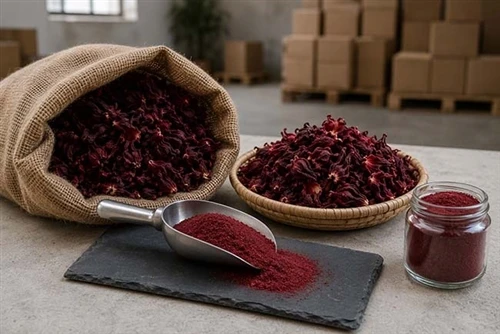
I kept seeing flaxseed extract pitched as a kidney- and heart-friendly superfood, and as someone who cares about kidney health I wanted a straight answer. But the word "extract" turned out to be the slippery part - the more I read, the more I realized that the honest answer depends almost entirely on which form of flaxseed you actually mean.
Is flaxseed safe for kidneys?
When someone types "Is flaxseed extract safe for kidneys?" they usually expect a clean yes or no. I did too. Yet most of the top-ranking articles quietly treat three very different products as if they were one. That flattening is exactly where readers get misled, so I want to untangle it before giving any verdict.
Flaxseed is the seed of Linum usitatissimum, a small flowering plant. The seed is naturally rich in three things that matter here: alpha-linolenic acid (ALA), a plant-based omega-3 fat; lignans, especially a compound called secoisolariciresinol diglucoside (SDG); and fiber (National Kidney Foundation). Those three ingredients are the reason flaxseed gets its reputation. But "flaxseed extract" on a label can point to any of three distinct products:
- Whole or ground flaxseed: the food itself, with all three components intact.
- Flaxseed oil: pressed from the seed and rich in ALA, but stripped of almost all the fiber and lignans.
- A lignan or SDG concentrate: the product closest to a true "extract."
These are not nutritionally interchangeable, and for someone with kidney disease the differences are not trivial. So let me walk through what each form actually does, and doesn't, mean for your kidneys.
Whole and ground flaxseed: usually kidney-friendly
The first thing I found was reassuring. Whole and ground flaxseed is generally considered safe - even beneficial - for people with kidney disease. The National Kidney Foundation specifically notes that flaxseed is low in sodium, potassium, and phosphorus, the three minerals kidney patients are most often told to manage (National Kidney Foundation). They list it as a sensible option across the whole range of kidney conditions: chronic kidney disease, transplant, hemodialysis, and peritoneal dialysis.
That low mineral profile is the reason it fits a renal diet. When kidneys lose filtering capacity, phosphorus can accumulate in the blood and leach calcium from bone, while excess potassium puts strain on the heart. As an ordinary food, flaxseed stays clear of both problems. For most kidney patients, a spoonful of ground seed is a reasonable addition rather than a risk.

Oil, powder, whole seed: same plant, very different mineral and fiber math.
The phosphorus catch in flaxseed oil
Here is the twist that most "flaxseed is safe" pages leave out. Flaxseed oil behaves nothing like the seed.
Oil is the fat fraction, so it keeps the ALA but loses the fiber and most lignans - and, importantly, it carries a phosphorus load. A 2025 cardiometabolic review flags that flaxseed oil is high in phosphorus, the very mineral CKD patients are often asked to limit, and it advises caution, recommending that people consult a provider before using flaxseed oil as a supplement (Dietary flaxseed: Cardiometabolic benefits and its role in promoting healthy aging, 2025).
In other words, the same plant yields a kidney-friendly food (the seed) and a supplement form (the oil) with a genuine phosphorus caveat. If you have kidney disease and you are reaching for oil capsules, that is the moment to pause and loop in your renal team. For me, this distinction was the single most useful thing I learned, and it is precisely the nuance the vague word "extract" conceals.
The oxalate reality check
There is a second myth worth busting, because it circulates constantly in kidney-stone communities: that all seeds are high in oxalate and therefore hazardous.
Oxalate is the compound that can bind with calcium in your urine to form kidney stones. But flaxseed is actually low in oxalate - roughly 2 mg per 2 tablespoons of ground seed, according to the Kidney Dietitian's low-oxalate list (The Kidney Dietitian). Chia seed, by comparison, is high in oxalate. So if you are a calcium-oxalate stone former, modest flaxseed is usually tolerable in a way chia often is not.
One serious caveat belongs here. If you ever develop an acute obstructing kidney stone or hydronephrosis, that is a medical emergency - flaxseed has no role there, and you should seek urgent care. And the documented cases of oxalate nephropathy in the literature came from excessive overall nut and seed intake, not from normal food amounts. The takeaway is not "avoid flaxseed"; it is "don't overdo it," which is sound advice for nearly any food.
What the evidence actually shows
I want to be straight about the gap here, because marketing copy tends to skip it. The kidney benefits of flaxseed are promising, but the strongest evidence comes from cells, animals, and small human studies - not from large trials proving it helps human kidneys.

Food-scale flaxseed - a tablespoon of ground seed, not bulk supplemental loading.
In rats with renal hypertension, a flax lignan concentrate lowered blood pressure and improved markers of kidney and heart health (Sawant & Bodhankar, 2016). In diabetic rats with and without chronic kidney disease, flaxseed reduced kidney damage and cooled down inflammation and oxidative stress (Effect of flaxseed on systemic inflammation and oxidative stress in diabetic rats, PMC8525749). In people on hemodialysis, some studies reported lower C-reactive protein and other inflammatory markers after flaxseed intake.
Those are encouraging signals. They suggest anti-inflammatory and antioxidant effects, possible blood-pressure support, and less kidney strain in disease models. But I will say it plainly: no large randomized controlled trial has yet proven that flaxseed or its extracts improve kidney outcomes in people. The 2025 review puts it well - flaxseed is "generally recognized as safe in moderate food amounts," but long-term supplement safety evidence remains limited. Until bigger human studies arrive, "promising" is the honest word, not "proven."
Who should be careful
Even a kidney-friendly food can be wrong for the wrong person. Drawing on the herbal and drug-reference guidance I reviewed, here are the groups that should exercise caution:
- Anyone on blood thinners (anticoagulants or antiplatelets): flaxseed may lengthen bleeding time and interact with those drugs.
- People taking blood-sugar or blood-pressure medications: flaxseed may add to their effects and risk unwanted lows.
- Those with hormone-sensitive conditions: lignans have mild estrogen-like activity, so caution is warranted.
- Pregnant or lactating people: use caution.
- Anyone prone to overconsumption: trace cyanogenic glycosides in flaxseed are a concern only in very large amounts.
None of this makes flaxseed "bad." It means context and dose decide whether it helps or harms - the same is true of most things we eat.
My practical checklist
After all this reading, here is the simple framework I now use, and I would suggest you borrow it before adding anything new to your routine:
1. Name the exact form. Ground seed, oil, or lignan extract? They are not the same thing.
2. If you have kidney disease, treat flaxseed oil as the cautious choice - its phosphorus content is the red flag. Talk to your nephrologist first.
3. For calcium-oxalate stone formers, modest ground flaxseed is usually fine; chia is the higher-oxalate one to watch.
4. Keep it food-scale. A tablespoon or two of ground seed, not bulk supplemental loading.
5. Check your medications. If you are on blood thinners or blood-pressure drugs, flag flaxseed to your prescriber.
6. Don't expect a cure. The human kidney-benefit evidence is still preclinical and small-study grade.
The straight answer to "Is flaxseed extract safe for kidneys?" turns out to be: the whole ground seed is broadly kidney-friendly and low in the minerals you limit; the oil is the form to watch because of phosphorus; and the "extract" label itself is too vague to trust without reading the actual ingredient list. I went in expecting a one-word verdict and came out with something better - clarity about the form in my own hand.
Disclaimer: This article is educational information, not medical advice. Consult a nephrologist or renal dietitian before changing your supplement use, especially if you have kidney disease.
References
National Kidney Foundation. Flax and Chia Seeds Facts. https://www.kidney.org/atoz/content/flax-and-chia-seeds
Dietary flaxseed: Cardiometabolic benefits and its role in promoting healthy aging (2025 review). https://pmc.ncbi.nlm.nih.gov/articles/PMC12181604/
The Kidney Dietitian. Low Oxalate Nuts & Seeds (flax ~2 mg oxalate per 2 tbsp). https://www.thekidneydietitian.org/low-oxalate-nuts/
Mayo Clinic News Network. People with kidney disease should be cautious with supplements. https://advancingthescience.mayo.edu/2019/09/30/people-with-kidney-disease-should-be-cautious-with-supplements/
Sawant SH, Bodhankar SL. Flax lignan concentrate reverses alterations in blood pressure... in DOCA-salt induced renal hypertension in rats (2016). PubMed 26795298. https://pubmed.ncbi.nlm.nih.gov/26795298/
Effect of flaxseed on systemic inflammation and oxidative stress in diabetic rats with or without chronic kidney disease (PMC). https://pmc.ncbi.nlm.nih.gov/articles/PMC8525749/
Herbal CKD monograph - Flaxseed (Linum usitatissimum). https://www.herbalckd.com/?nhp=flaxseed%20(linum%20usitatissimum)%20(alpha-linolenic%20acid)%20/